
Anderson Criminal Court Records
Anderson criminal court records cover cases filed through both the Anderson Municipal Court and the Anderson County Court of General Sessions. Anderson is the county seat of Anderson County in South Carolina's Upstate region, with a population of roughly 28,000. The city sits in the 10th Judicial Circuit. You can search these records online through the South Carolina Public Index or request them in person at the courthouse. This guide walks you through every step of the process.
Anderson Quick Facts
Criminal Court Records for Anderson Residents
Anderson residents interact with two court levels when it comes to criminal matters. Misdemeanor charges and city ordinance violations go through the Anderson Municipal Court. Felony charges move up to the Anderson County Court of General Sessions. Both courts generate records that are open to the public under South Carolina law.
The Anderson County Clerk of Court is the central keeper of felony case records. The Clerk maintains files for every case that comes through the Court of General Sessions. These files hold charging documents, motions, court orders, sentencing information, and judgments. You can visit the Clerk's office at the Anderson County Courthouse or look up basic case data through the SC Public Index for Anderson County.
South Carolina treats most court records as public. The South Carolina Code Title 17 governs criminal procedure in the state, and the Freedom of Information Act (S.C. Code Ann. § 30-4-10) gives the public broad rights to access court records. Anderson residents and outside requesters alike can use these rights to search criminal court records in Anderson.
Note: Some records involving juveniles or pending expungement orders may not be available through the standard public index search.
How to Search Anderson Criminal Court Records
The fastest way to search Anderson criminal court records is through the South Carolina Judicial Branch's online Public Index. The system is free and open around the clock. Go to sccourts.org and follow the link to the Public Index. Select Anderson County from the dropdown list and enter the name of the person you are searching. The results show case numbers, filing dates, charges, and case status.
You can also search by case number if you have it. The Public Index gives you a snapshot of each case but does not display the full documents. For the actual filings, motions, and orders, you need to request copies from the Anderson County Clerk of Court. Plain copies and certified copies are both available. Certified copies carry a seal and signature and are needed for many legal uses. Call the Clerk's office ahead of time to confirm fees and what to bring when you visit.
In-person searches at the Anderson County Courthouse let you review the physical case file. Staff at the Clerk's office can help you locate cases by name or case number. The Anderson County Clerk of Court office is open during standard business hours Monday through Friday.
The South Carolina Judicial Branch at sccourts.org is the starting point for any online search of Anderson criminal court records.
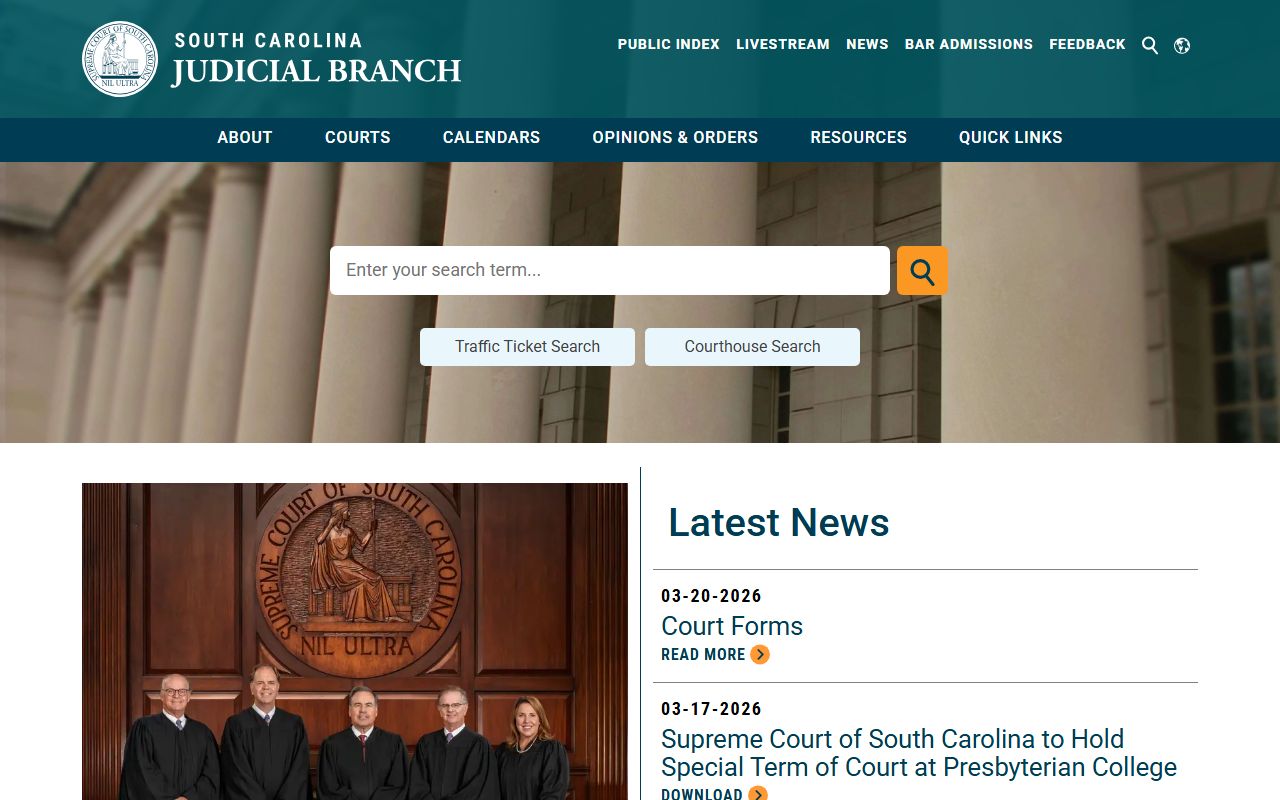
The SC Judicial Branch homepage provides direct links to the Public Index, court forms, and docket information for Anderson County and every other county in the state.
Anderson Municipal Court Records
The Anderson Municipal Court handles misdemeanor offenses, traffic violations, and violations of city ordinances that occur within Anderson city limits. The court also conducts preliminary hearings for felony cases and sets bond for people who have been arrested. This first appearance is an important step, and records from that hearing become part of the case file.
Court records from the Anderson Municipal Court are available for public inspection during business hours. You can request records in person at the court. Traffic ticket payments can be made online or in person. If you need a record of a case that started in Municipal Court but moved up to General Sessions, you will need to check both courts for the full picture. The Clerk of Court handles General Sessions files, while the Municipal Court keeps its own records.
Note: The Anderson Municipal Court does not handle felony trials. Felony cases are transferred to the Anderson County Court of General Sessions after the preliminary hearing.
Anderson Police Department Records
The Anderson Police Department maintains arrest records, incident reports, and related law enforcement documents. These records come from the department's own investigations and arrests within city limits. They are separate from court records but often connect to court filings when charges are brought.
You can request records from the Anderson Police Department through their Records Division. Common requests include incident reports, accident reports, and arrest records. The department works closely with both the Anderson Municipal Court and Anderson County courts. Some records may not be released if they are part of an active investigation. Allow time for processing, as larger requests can take several days to fulfill.
SLED maintains a statewide criminal records database that includes records from Anderson law enforcement agencies and courts.

SLED's criminal history records system at sled.sc.gov/CriminalRecords provides certified background checks that draw from arrest and conviction data statewide, including records from Anderson County.
What Anderson Criminal Court Records Contain
Criminal court records in Anderson include a wide range of documents from different stages of a case. Understanding what each document contains helps you know what to request and where to look. The records span from the first arrest all the way through sentencing and any appeals.
The main types of documents found in Anderson criminal court records include:
- Arrest warrants and affidavits supporting the charge
- Indictments or informations filed by the solicitor's office
- Plea agreements and guilty plea transcripts
- Trial transcripts and hearing records
- Sentencing orders and judgment of conviction
- Probation and supervision orders
- Expungement orders when applicable
Felony cases prosecuted by the 10th Circuit Solicitor's Office generate the most extensive records. The Solicitor's office handles all felony prosecutions in Anderson County. Victim services are also available through the Solicitor's office. For cases that resulted in state prison time, additional records may exist through the South Carolina Department of Corrections.
Public Records Access in Anderson
Anderson residents have several options for accessing public records. The South Carolina Freedom of Information Act gives any person the right to inspect and copy public records held by state and local agencies. Court records fall under this umbrella, though there are specific exceptions for sealed files, juvenile records, and certain ongoing investigations.
For court records, the best starting point is the Public Index at publicindex.sccourts.org/anderson/. For certified background checks, use the SLED system at sled.sc.gov/CriminalRecords. For court forms and procedures, the SC Judicial Branch website at sccourts.org/forms has what you need. These three sources cover most public records needs in Anderson.
South Carolina Code Title 17 governs criminal procedure and the rules that apply to all criminal court records in Anderson and across the state.
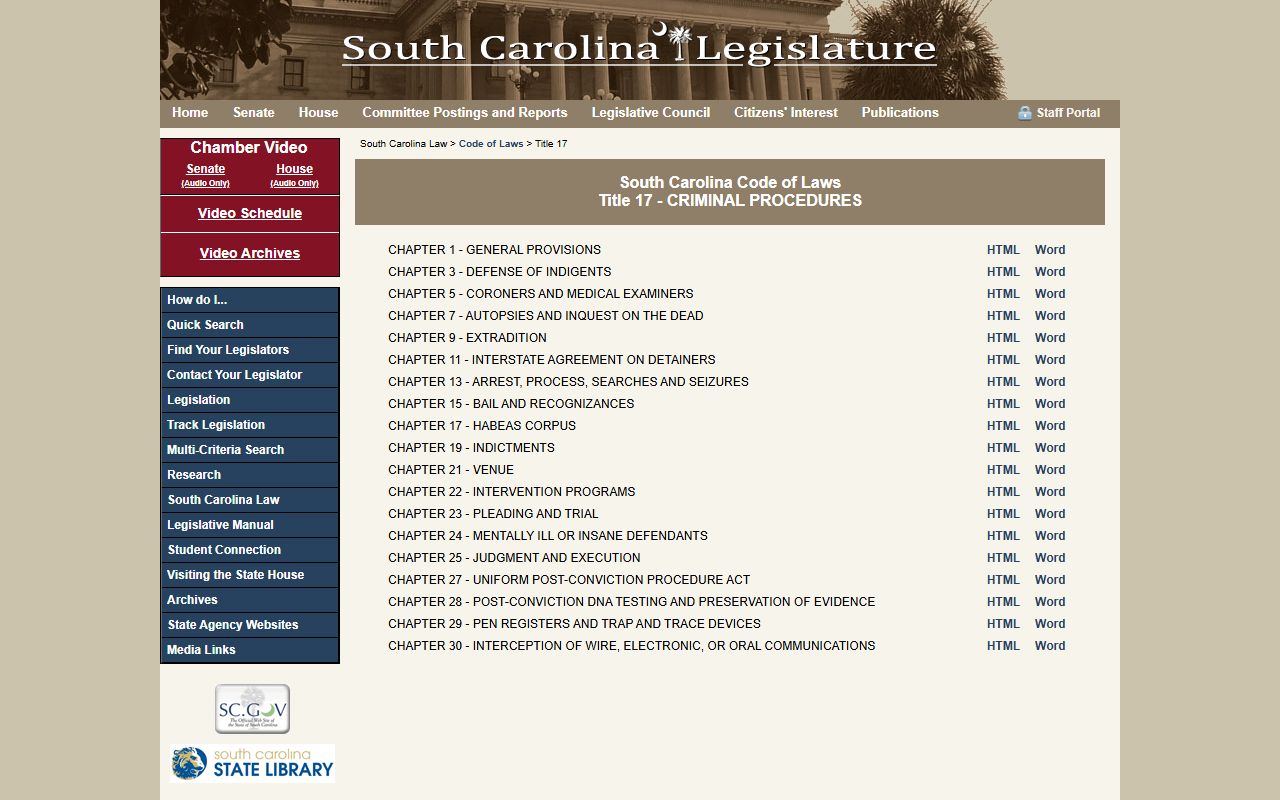
Reviewing Title 17 gives you a clear picture of how criminal cases move through South Carolina courts, from arrest through final sentencing, which helps when interpreting the documents you find in Anderson court files.
Expungement Options for Anderson Residents
Anderson residents may qualify to have certain criminal records expunged under South Carolina law. Expungement removes the record from public view and can apply to arrests that did not result in conviction, first-offense convictions for some misdemeanors, and other qualifying situations. The process requires a petition to the court that handled the original case.
The South Carolina Judicial Branch has detailed information on expungement at sccourts.org/courts/expungement.cfm. Court forms for expungement petitions are available at sccourts.org/forms. You file the petition with the Anderson County Clerk of Court. The Solicitor's office reviews the petition, and a judge makes the final decision. Once granted, the record is removed from the Public Index and from SLED's criminal history database.
If you were a victim of a crime in Anderson, the SC Attorney General's Office victim services page has resources that may help you understand how expungements affect victim notification rights.
Note: Expungement eligibility depends on the specific charge, conviction status, and time elapsed since the case closed. An attorney can help you determine whether your Anderson record qualifies.
Anderson County Criminal Court Records
Anderson is the county seat of Anderson County. All felony cases from Anderson city are processed through the Anderson County Court of General Sessions. For the full county court system, the Clerk of Court's contact information, and related resources, visit the Anderson County criminal court records page.
Nearby South Carolina Cities
Criminal court records in nearby cities are managed through their own county and municipal courts. Select a city below to find court records information for that area.