
Sumter County Criminal Court Records
Searching for criminal court records in Sumter County starts with the Clerk of Court, which maintains all filings from the Court of General Sessions. Sumter County is located in the east-central part of South Carolina and is served by the 3rd Judicial Circuit. Records include felony cases, serious misdemeanors, and related court documents. You can search online through the South Carolina Public Index or visit the courthouse in person. Both methods give you access to case details, charges, and hearing information filed in Sumter County.
Sumter County Quick Facts
Sumter County Clerk of Court
The Sumter County Clerk of Court is the official keeper of criminal court records in Sumter County. The office maintains all case files from the Court of General Sessions, which handles felony charges and serious misdemeanors. Staff at the Clerk's office can help you locate records, request copies, and understand what documents are available to the public. The office is located at 141 North Main Street in Sumter, SC.
Records kept by the Sumter County Clerk of Court go back many years. They include charging documents, plea entries, sentencing orders, and court dispositions. Jury management for criminal trials is also handled through this office. If you need a certified copy of any Sumter County criminal court record, the Clerk of Court is the right place to start. Visit sumtercountysc.org/clerk-of-court for current office information.
| Office |
Sumter County Clerk of Court 141 North Main Street Sumter, SC 29150 |
|---|---|
| Hours | Monday through Friday, 8:30 AM to 5:00 PM |
| Website | sumtercountysc.org/clerk-of-court |
How to Search Sumter County Criminal Court Records
Sumter County criminal court records are available through two main methods. Online access is the fastest way to check basic case information. In-person visits to the courthouse give you access to the full file and certified copies. Both are valid options depending on what you need and how much detail you require.
The South Carolina Judicial Branch operates the Public Index, a free online tool for searching court records statewide. Sumter County participates in this system. You can search criminal cases by the defendant's name or by case number. The results show case status, charges filed, hearing dates, and dispositions. Go to publicindex.sccourts.org/sumter/ to search Sumter County criminal court records online. The main sccourts.org site also has links to court forms and other resources.
Visiting the Sumter County Courthouse in person allows you to review the physical file. Bring a valid photo ID. The Clerk of Court staff can search by name or case number and pull files for your review. Certified copies of criminal court records are available for a fee. Older records may require additional time to locate, so calling ahead is a good idea when researching Sumter County cases from many years ago.
Note: The Public Index provides general case information but does not always include document images. For official certified copies, contact the Sumter County Clerk of Court directly.
What Sumter County Criminal Records Contain
Criminal court records in Sumter County include a range of documents from the time a case is filed through its final disposition. The indictment or arrest warrant is typically the first document in the file. It states the charges and the law alleged to have been broken. Other documents follow as the case moves through the court system in Sumter County.
A typical Sumter County criminal court record may contain the following types of documents and information:
- Arrest warrants and initial charging papers
- Indictments returned by the grand jury
- Bond hearing records and bail conditions
- Plea agreements and guilty plea transcripts
- Trial orders and jury verdicts
- Sentencing orders and probation conditions
- Appeals and post-conviction motions
Most criminal court records in Sumter County are public under South Carolina law. The defendant's name, charges, and case outcome are generally available. Some records involving juveniles or sealed cases are not open to the public. Under Title 17 of the South Carolina Code, criminal procedure rules govern what must be kept and how long records are retained.
Sumter County Court of General Sessions
The Court of General Sessions is the main criminal court in Sumter County. It handles all felony charges and serious misdemeanor cases filed in the county. Judges from the 3rd Judicial Circuit preside over General Sessions cases. Jury trials for criminal matters are held here. Grand jury proceedings, which determine whether enough evidence exists to proceed with a felony charge, also take place within this court.
The 3rd Judicial Circuit covers Sumter and Lee counties. Circuit court judges rotate across these counties on a schedule set by the South Carolina Supreme Court. Cases move through the court from arrest and bond hearing to arraignment, pre-trial motions, and either a plea or trial. Each step generates records that are filed with the Sumter County Clerk of Court and stored in the county's criminal case files.
The South Carolina Judicial Branch oversees the administration of the Court of General Sessions statewide. Details on court terms and scheduling in Sumter County are published through sccourts.org.
Note: The Court of General Sessions does not handle traffic infractions or minor misdemeanors. Those cases are handled by magistrate courts and municipal courts throughout Sumter County.
Sumter County Sheriff and Arrest Records
The Sumter County Sheriff's Office is the primary law enforcement agency for unincorporated areas of Sumter County. The Sheriff's Office makes arrests, investigates crimes, and operates the Sumter County Detention Center, where individuals awaiting trial are held. Arrest records created by the Sheriff are separate from court records but are closely related to criminal cases that appear in General Sessions.
Arrest records from the Sumter County Sheriff's Office are maintained by that agency. You can contact the Sheriff's Office directly to request arrest records or incident reports. The detention center maintains records of individuals who have been booked. For information on current inmates or those recently released, the Sheriff's Office records division can help. Visit sumtercountysc.org/sheriff for more details on arrest records and law enforcement services in Sumter County.
The South Carolina Law Enforcement Division also maintains a statewide criminal records database. For background check purposes, SLED criminal records provide a broader view of an individual's criminal history across South Carolina, not just in Sumter County.
3rd Circuit Solicitor in Sumter County
The 3rd Circuit Solicitor's Office prosecutes all criminal cases heard in the Court of General Sessions in Sumter County. The solicitor, also called the district attorney in some states, represents the state of South Carolina in felony prosecutions. The office decides which cases go to trial, what plea agreements are offered, and how charges are pursued in Sumter County courts.
The Solicitor's Office also works with law enforcement agencies in Sumter County to build cases and present evidence. Victims of crimes are assisted by victim advocates in the office. These advocates help victims understand the court process, attend hearings, and exercise rights under South Carolina law. For information on active Sumter County prosecutions or victim services, the 3rd Circuit Solicitor can be reached through county government contacts. The South Carolina Attorney General's office provides additional victim resources at scag.gov/crime-victims/.
Expungement of Sumter County Criminal Records
South Carolina law allows certain criminal records to be expunged, which means they are removed from public access. Not all records qualify. Eligibility depends on the charge, the outcome of the case, and how much time has passed. First-offense convictions for certain crimes, arrests where charges were not filed, and cases that ended in acquittal may qualify for expungement in Sumter County.
The process to expunge a Sumter County criminal court record begins with the Clerk of Court. You file a petition for expungement, which is then reviewed by the Solicitor's Office and, in some cases, the arresting agency. The court holds a hearing if there is any objection. If the petition is granted, the records are removed from the Public Index and are no longer available to the general public. Standard court forms for expungement are available through sccourts.org/forms/.
For more information on whether your Sumter County criminal record qualifies for expungement, visit sccourts.org/courts/expungement.cfm. You may also want to speak with a licensed attorney who handles criminal cases in the 3rd Judicial Circuit.
The South Carolina Judicial Branch website also provides the full text of court forms needed to begin the expungement process in Sumter County.
The South Carolina Judicial Branch at sccourts.org is the central resource for court information across all 46 counties, including Sumter County.
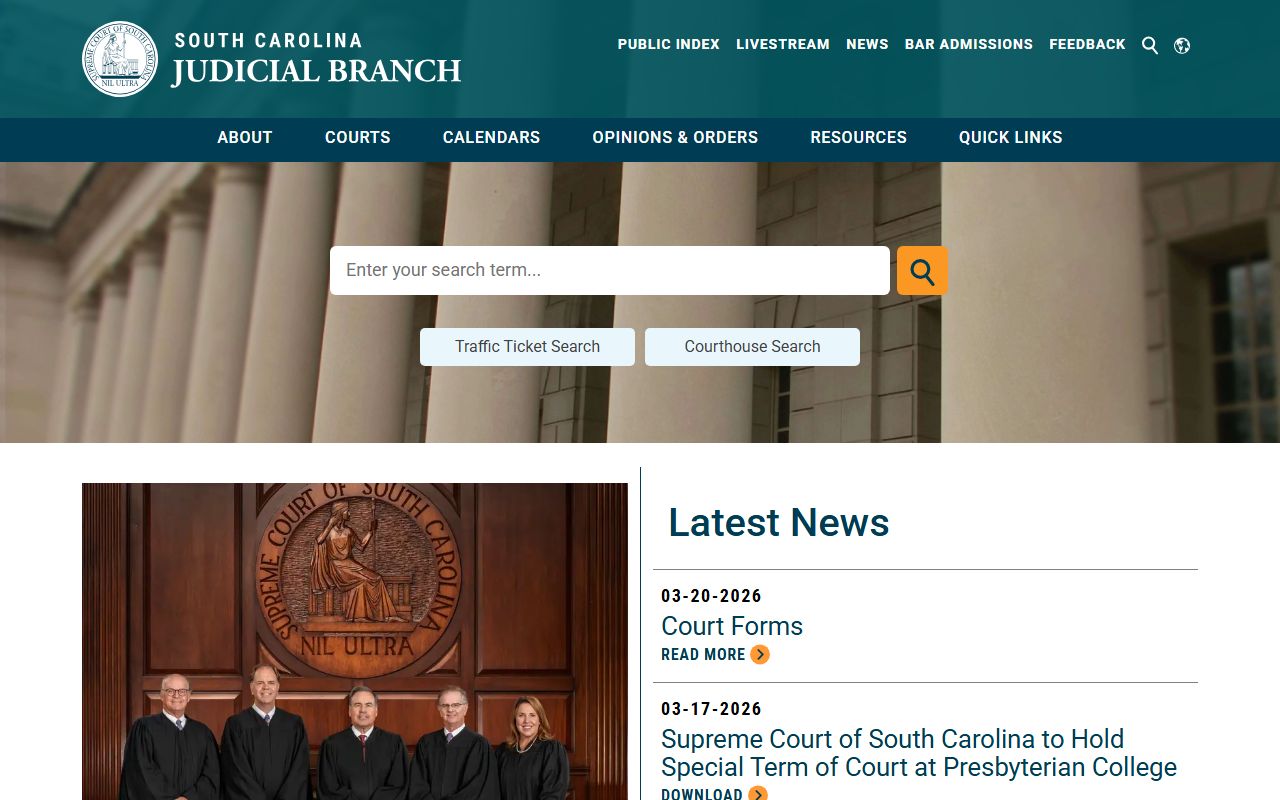
The Judicial Branch site provides access to the Public Index, court forms, and scheduling information for the 3rd Judicial Circuit serving Sumter County.
Cities in Sumter County
Sumter County is anchored by its county seat, the City of Sumter. All felony criminal court records for residents of Sumter County are filed and maintained through the Sumter County Court of General Sessions.
The City of Sumter is the county seat and the largest municipality in Sumter County. The Clerk of Court office and courthouse are located in downtown Sumter.
Nearby Counties
Sumter County borders several other South Carolina counties. If you are searching for criminal court records and are unsure which county holds the case, use the county where the alleged offense occurred or where the defendant resided at the time of filing.