
Marion County Criminal Court Records
Marion County criminal court records are held by the Clerk of Court at the Marion County Courthouse in Marion. The county is part of the 12th Judicial Circuit and sits in the Pee Dee region of South Carolina. Felony cases are heard in the Court of General Sessions. Records from those proceedings are public documents that you can search online through the South Carolina Public Index or access in person at the courthouse on North Main Street. This guide covers the key offices, search methods, and record types for Marion County.
Marion County Quick Facts
Marion County Clerk of Court
The Marion County Clerk of Court is the official records office for criminal court matters in the county. The Clerk maintains all case files for the Court of General Sessions and Court of Common Pleas. Each time a criminal case is filed in Marion County, the Clerk assigns a case number and starts a file that tracks every document, hearing, and outcome throughout the life of the case.
The Clerk of Court office is located at 101 North Main Street in Marion. Staff can help you search for records using a name or case number. Certified copies of documents are available on request. The Clerk also manages jury selection and oversees the court schedule for Marion County. These administrative functions are tied directly to the criminal docket.
| Office |
Marion County Clerk of Court 101 North Main Street Marion, SC 29571 |
|---|---|
| Hours | Monday through Friday, 8:30 AM to 5:00 PM |
| Website | marionsc.gov/clerk-of-court |
Note: Confirm current office hours with the Marion County Clerk of Court before visiting. Hours may vary on holidays or during court terms.
How to Search Marion County Criminal Court Records
Marion County participates in the South Carolina Public Index, which is the state's free online court records search tool. You can access Marion County criminal court records at publicindex.sccourts.org/marion/. Enter a defendant's name to pull up matching cases. The results show the charges filed, the case status, and key dates. This is often the fastest way to get a summary of a criminal matter in Marion County without visiting the courthouse.
When the online system does not have enough detail, an in-person visit is the next step. Go to the Clerk of Court office at 101 North Main Street. Bring your ID and the name or case number you are looking for. Staff can pull the full case file. Older records stored in paper format may take longer to retrieve. The main South Carolina courts website at sccourts.org also offers guidance on how to search records across the state.
When searching by name, keep in mind that spelling variations or middle name differences can affect results. Try alternate spellings if your first search returns nothing. If you have the case number, always use it since it is the most direct way to find the right file in the Marion County system.
What Marion County Criminal Records Include
Criminal court records in Marion County begin with the initial charging document. This paper sets out the specific crime alleged, the code section violated, and the date and location of the alleged offense. Warrants, indictments, and arrest records are added as the case moves forward. Grand jury decisions, which are either true bills or no bills, become part of the permanent case file.
Court proceedings generate additional documents. Bond hearings and any changes to bail conditions are logged. Every court date is noted, along with whether the defendant appeared. Motions filed by the prosecution or defense, and the judge's rulings on them, are all in the record. Continuances and their reasons are also noted.
The final disposition closes the record. Convictions, acquittals, and dismissals are all recorded. When a conviction results in sentencing, the sentence details are filed. This includes prison time, probation conditions, fines, and special requirements. Appellate filings may be attached if the case is appealed after final judgment in Marion County.
South Carolina's criminal procedure rules, found at Title 17 of the South Carolina Code of Laws, shape how every record is created and stored. Reviewing these statutes can help you understand the documents in a Marion County criminal court file.
Marion County Court of General Sessions
Felony criminal cases in Marion County are heard in the Court of General Sessions. This court is part of the 12th Judicial Circuit. Circuit Court judges handle trials, pre-trial hearings, and sentencing. The court sits at the Marion County Courthouse and meets throughout the year to work through the criminal docket.
Cases reach General Sessions after an arrest and a finding of probable cause at the Magistrate or Municipal Court level. The 12th Circuit Solicitor's Office then reviews the case and decides how to proceed. If a grand jury returns a true bill, the case is formally indicted and proceeds in General Sessions. Defendants may go to trial or reach a plea agreement. All of this activity creates records maintained by the Marion County Clerk of Court.
The South Carolina Judicial Branch court forms library provides standardized forms used in General Sessions proceedings in Marion County and across all circuits in the state.
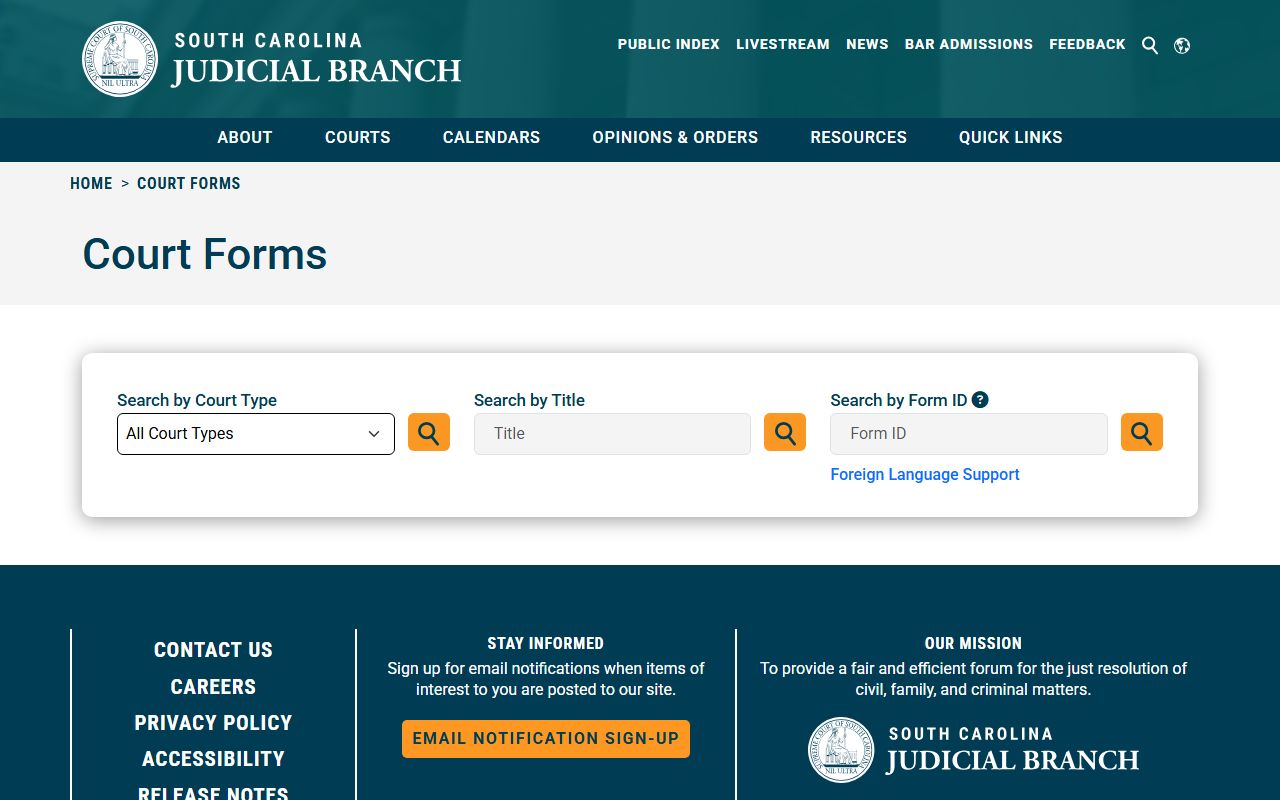
Court forms for General Sessions proceedings are available through the South Carolina Judicial Branch at sccourts.org/forms/. These forms are used in Marion County and across all circuits in the state.
Marion County Sheriff and Arrest Records
The Marion County Sheriff's Office provides law enforcement services throughout the county. The Sheriff maintains arrest records for incidents in unincorporated Marion County. These records are created when someone is taken into custody and booked at the county jail. Booking records include the name of the arrested person, the date of arrest, and the charges. These are public records you can request from the Sheriff's Office.
The Sheriff's Office operates the county jail. Jail records are distinct from court records but both are often relevant when researching a criminal matter. An arrest record shows when someone was taken into custody. The court record shows what happened after that in the legal process. Both types of records exist in Marion County and are accessible to the public.
For a certified statewide criminal history report, contact the South Carolina Law Enforcement Division. SLED maintains records from all agencies in South Carolina, including Marion County. You can submit a records request at sled.sc.gov/CriminalRecords.
Note: Arrest records from the Marion County Sheriff's Office reflect charges at the time of booking and may not show the final court disposition. Always check the court record for the outcome of the case.
12th Circuit Solicitor and Marion County Cases
The 12th Judicial Circuit Solicitor prosecutes felony criminal cases in Marion County. After law enforcement makes an arrest, the Solicitor's Office reviews the evidence and decides what charges to pursue. This decision shapes the criminal court record that will be created in Marion County. The Solicitor also handles plea negotiations and represents the state at trial when cases do not settle.
Victim services are part of what the Solicitor's Office provides in Marion County. Advocates help victims understand the process, get updates on cases, and prepare for court. For broader victim resources at the state level, visit scag.gov/crime-victims/. The South Carolina Attorney General's office coordinates victim services programs and explains victim rights in criminal proceedings.
Expungement and Public Access to Marion County Records
Marion County residents may apply to have certain criminal records expunged under South Carolina law. Expungement removes a record from public access, including the Public Index and SLED's criminal history database. Dismissed charges, not-guilty verdicts, and some first-offense minor convictions may be eligible. Prior criminal history affects whether a person qualifies.
The application process starts at the Solicitor's Office. If approved, it goes to the circuit court. A successful court order triggers removal from state databases and notification to all relevant agencies. The process takes time and requires careful preparation. Mistakes in the paperwork can cause delays or denials in Marion County.
The South Carolina Judicial Branch provides step-by-step expungement information at sccourts.org/courts/expungement.cfm. Required forms are available at sccourts.org/forms/. Speaking with a licensed South Carolina attorney before starting the process in Marion County is a good idea.
The South Carolina Attorney General's victim services program provides guidance on victim rights in expungement proceedings, including the right to notice and to object.
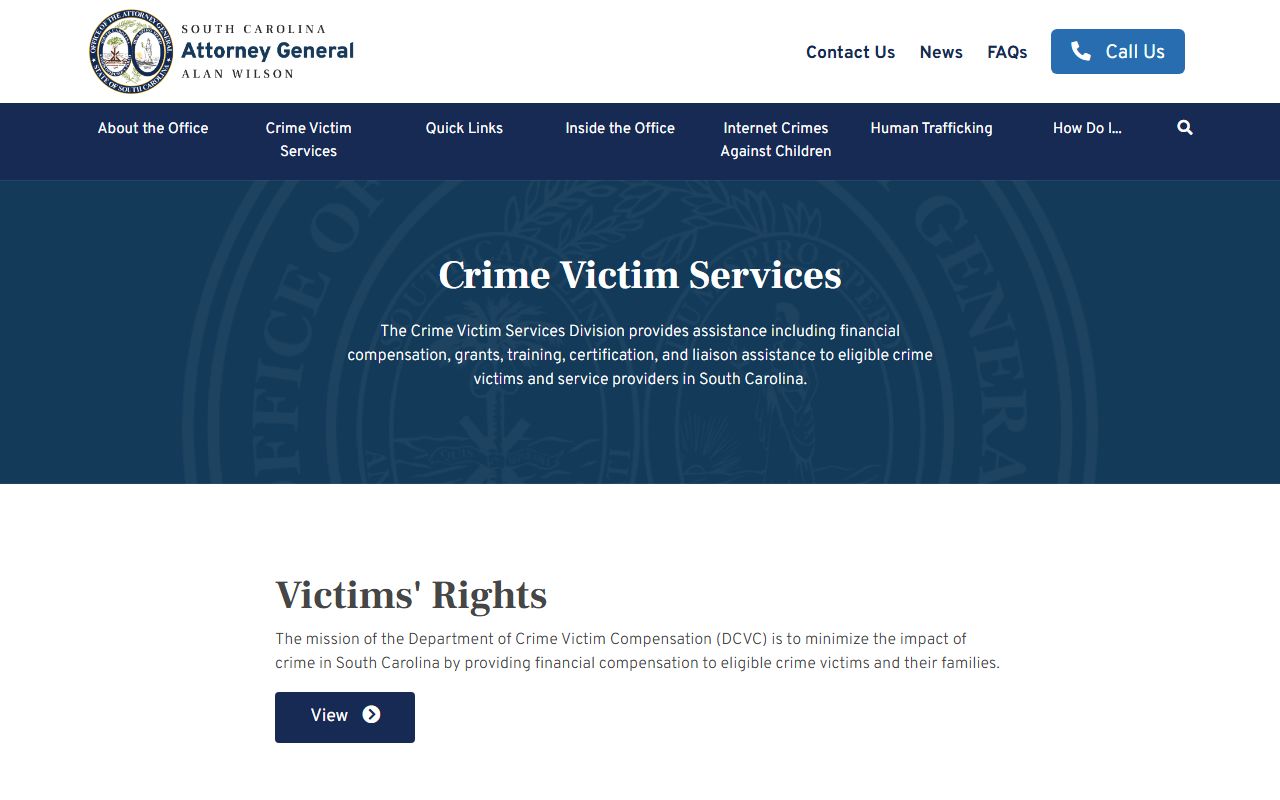
The South Carolina Attorney General's victim services resources at scag.gov/crime-victims/ include information on victim rights in expungement cases, including the right to be notified and to object.
Nearby Counties
Marion County is surrounded by other Pee Dee region counties. Criminal cases are filed where the offense occurred. If you are unsure which county has jurisdiction, check the location of the arrest or incident.